
Flat Roof Ponding Water: Causes, Risks and Fixes
Short answer: the National Roofing Contractors Association (NRCA) treats water as ponding when it is still on the roof more than 48 hours after the rain ends. A few small puddles that dry within a day or two are normal on a low-slope roof. Water that sits longer wears the membrane faster, adds weight, finds every weak seam and can affect a manufacturer's warranty. The fixes range from cleaning a drain to rebuilding slope with tapered insulation.
Elite Champaign Commercial Roofers is a free quote service, not a roofing contractor. We connect Champaign-area property owners with independent, Illinois-licensed commercial roofing contractors who diagnose drainage problems and price the fixes.
How much slope a flat roof should have
"Flat" roofs aren't truly flat. Industry groups including NRCA generally call for a minimum slope of 1/4 inch per foot so water reaches drains, scuppers or gutters. Many older roofs were built with less, and decks sag and insulation compresses over time, so roofs that once drained can start to hold water.
Why ponding water is a problem
- Faster membrane wear. Standing water and the dirt it leaves behind speed up weathering of the surface, especially at seams.
- Leaks get worse. A small opening under a pond sees water for days instead of minutes.
- Added weight. Water is heavy. As a deck deflects under it, the low spot deepens and holds even more. Designers check this; if a pond keeps growing, ask whether a structural engineer should look at it.
- Winter ice. In Champaign's freeze-thaw winters, ponds freeze, thaw and refreeze, stressing seams and flashing, and ice can block drains so meltwater backs up.
- Vegetation and debris. Long-standing water collects dirt, leaves and sometimes plant growth that can damage the membrane.
- Warranty terms. Some membrane warranties exclude damage from ponding water. Check your warranty language or ask the manufacturer.
What causes ponding on a commercial roof
| Cause | What it looks like | Usual fix |
|---|---|---|
| Clogged drains or scuppers | Water collects around the drain; debris in the strainer | Clean drains, replace strainers, schedule regular clearing |
| Too few drains or poor drain placement | Ponds midway between drains or behind HVAC units | Add drains or scuppers; add crickets to divert water |
| Drains set too high | A ring of water around a drain that sits proud of the roof | Reset the drain or build a sump around it |
| Deck deflection | Ponds mid-span between joists or beams | Engineer review; tapered insulation at re-roof |
| Crushed or wet insulation | Soft, low areas, often near rooftop units or walkways | Cut out and replace wet or crushed board |
| No designed slope | Water spread across large areas | Tapered insulation system at replacement |
Fixes, from simplest to biggest
1. Clear and maintain drains and scuppers
The cheapest fix is often the right first step. Leaves, gravel, nests and debris from rooftop work clog strainers. In Champaign, a fall cleaning after the leaves drop and before the first hard freeze helps prevent ice dams at drains and scuppers. A contractor can add drain clearing to a roof inspection and maintenance plan.
2. Add drains, scuppers or overflow
Where water simply has nowhere to go, adding a drain or a scupper through a parapet can solve it. Overflow scuppers or drains also give water a backup route when the primary drain clogs. This involves plumbing and masonry work, so expect a permit and a detailed bid.
3. Crickets and saddles
Crickets are small built-up slopes that steer water around obstacles such as HVAC curbs or toward drains between two low points. They are often added during a repair or re-roof.
4. Tapered insulation at re-roof
For widespread ponding, the long-term fix is usually a tapered insulation system installed during a replacement. Pre-cut boards build slope toward drains across the whole roof. In Champaign, a full replacement often has to meet the Illinois Energy Conservation Code's insulation levels anyway — often R-30ci for above-deck insulation in this climate zone, per code summaries, confirmed by your contractor and the building department — and tapered insulation can count toward that. Fixing drainage and meeting code in one project is often efficient. See roof recover vs replacement for how that decision gets made.
5. Coatings
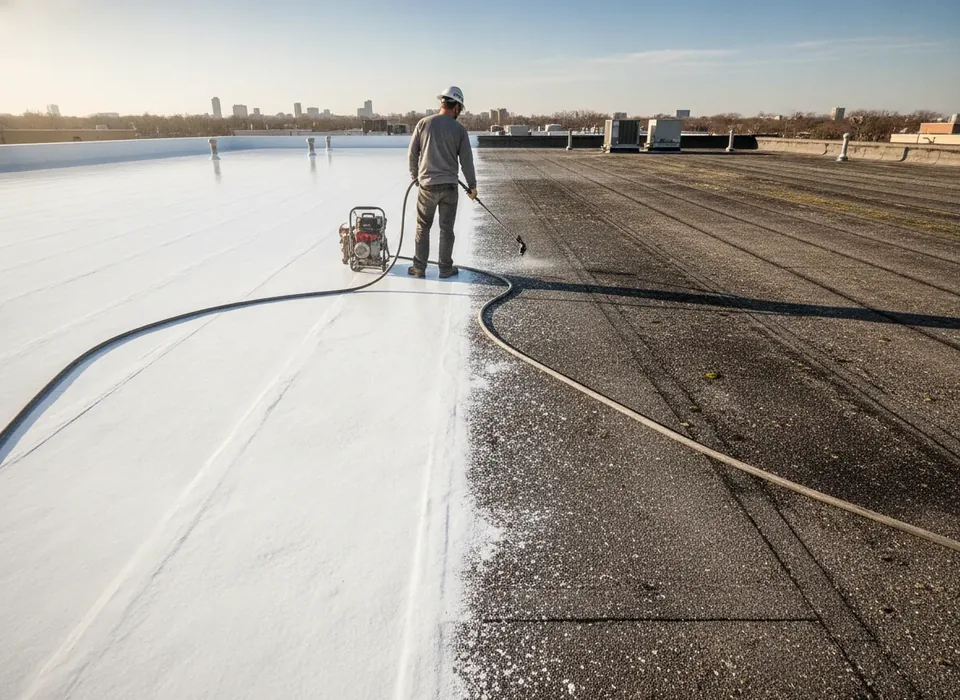
A coating does not change slope, so it won't stop water from collecting. Many silicone coatings are marketed as tolerant of ponding water, which can make them a reasonable way to extend an aging roof with minor ponding. Check the manufacturer's warranty terms on ponding before choosing one. Silicone roof coatings run about $1.50–$4.50 per square foot installed as a typical national range (Angi/HomeAdvisor 2025). The roof coatings & restoration page covers when a coating fits.
Don't check for ponding by walking the roof in bad weather. Don't go on the roof in bad weather; use a contractor. A useful request: ask the contractor to inspect and photograph the roof about two days after a good rain, when lingering water shows exactly where the low spots are.
What drainage fixes cost
Drain cleaning and minor repairs are usually priced as service calls. Adding drains or scuppers, rebuilding sumps and installing crickets are priced job by job. Tapered insulation is priced as part of a re-roof and is usually not included in national per-square-foot ranges. For context, typical national installed ranges are about $4–$14 per square foot for TPO, with tear-off adding about $1–$5 (Fixr Jan 2026). Champaign bids vary — get local quotes. The commercial roofing cost guide shows every system.
Questions to ask a contractor about ponding
- Where is the water collecting, and what's causing it at each spot?
- Can drain work or crickets solve it, or does the roof need tapered insulation?
- Is the insulation under the ponds wet or crushed?
- Does my current warranty exclude ponding damage?
- Will drainage changes need a permit here? (Champaign permits go through the Fire Department's Building Safety Division; other towns have their own offices.)
- What is your Illinois unlimited roofing license number? It starts with 104-; verify it at idfpr.illinois.gov.
Leaks often show up first under a pond; the guide to finding a flat roof leak explains how they're traced. To get drainage fixes priced, request free quotes from independent commercial roofing contractors.
Frequently asked questions
How long can water sit on a flat roof?
The National Roofing Contractors Association treats water as ponding when it remains more than 48 hours after rain ends. Small puddles that dry within a day or two are normal on a low-slope roof. Water that stays longer, or ponds that keep growing, should be looked at by a contractor, ideally a couple of days after a rain.
Is ponding water on a flat roof covered by warranty?
Often not. Some membrane warranties exclude damage caused by ponding water, which is one reason drainage gets attention during inspections. Read the ponding language in your warranty or ask the manufacturer. If you are planning a re-roof, ask bidders how their design addresses drainage and what the new warranty says about standing water.
How do you fix ponding water on a commercial flat roof?
Start with the cause. Clogged drains and scuppers are cleaned; missing drainage gets added drains, scuppers or crickets; crushed or wet insulation is replaced. Widespread ponding is usually fixed with tapered insulation during a replacement, which can also help meet the energy code. A coating protects the surface but does not add slope.
Does a silicone coating stop ponding?
No. A coating doesn't change the roof's slope, so water will still collect in low spots. Many silicone coatings are marketed as tolerant of ponding water, so they can protect an aging roof with minor ponding. Check the coating manufacturer's warranty terms and fix clogged drains first. Typical national installed ranges are about $1.50–$4.50 per square foot.