
Commercial Roof Coatings and Restoration in Champaign, IL
A fluid-applied coating can add years to a tired but sound commercial roof for a fraction of a re-roof. Elite Champaign Commercial Roofers is a free quote service, not a roofing contractor: describe your roof and independent, Illinois-licensed contractors can tell you whether it is a coating candidate and quote it.
Get Free Quotes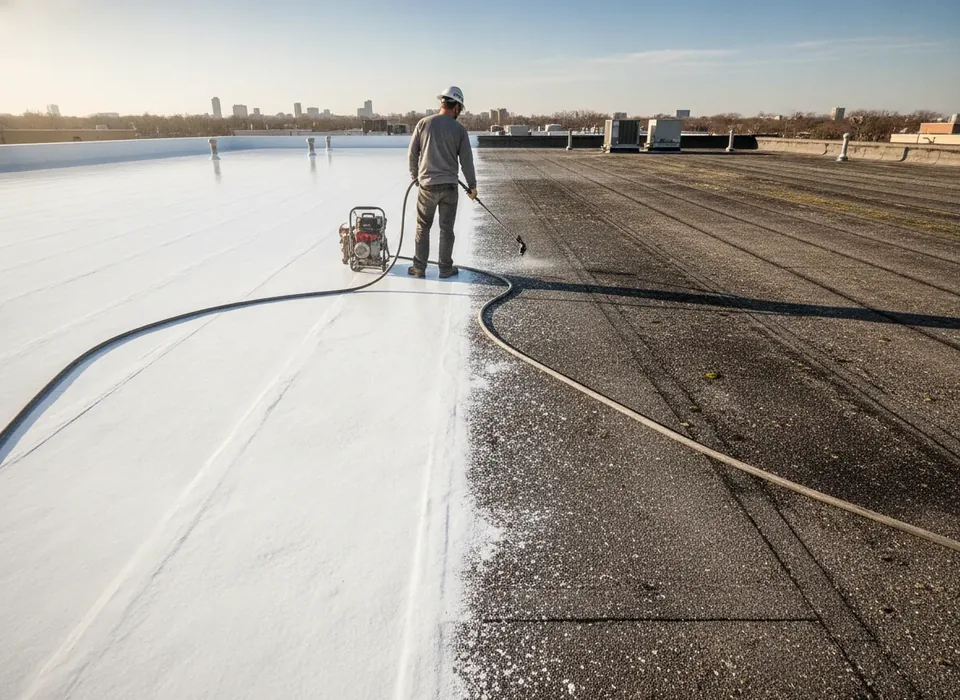
What a roof restoration is
Restoration means cleaning and repairing an existing roof, reinforcing its seams and details, and applying a liquid coating that cures into a continuous, seamless membrane. The main coating types:
- Silicone. Handles ponding water and UV well. Hard to recoat with anything but more silicone, and it gets slippery when wet.
- Acrylic. Water-based, reflective and usually lower cost. Does not tolerate ponding; best on roofs that drain well.
- Urethane and others. Tougher against foot traffic and impact; often used as a base coat or on high-traffic areas.
A coating fits when the roof is leaking at details but the membrane is mostly intact and the insulation underneath is dry. It can be applied to many metal, TPO, EPDM, mod bit and BUR roofs with the right primer and prep.
Questions? Call Call (727) 300-6656.
Roof coating cost per square foot
| System / item | Typical installed range | Source |
|---|---|---|
| Silicone roof coating | $1.50–$4.50 / sq ft | Angi/HomeAdvisor 2025 |
| TPO single-ply | $4–$14 / sq ft | Fixr 2026; ServiceTitan 2026 ($4–$8) |
| EPDM rubber | $3–$13 / sq ft | ServiceTitan 2026; Fixr 2026 |
| Tear-off / removal (adder) | $1–$5 / sq ft | Fixr 2026 |
The gap between a coating and a full system with tear-off is the main reason owners look at restoration. The coating price depends on:
- Coating type and thickness (mils of dry film), which usually tie to warranty length
- Cleaning and prep: power washing, removing loose material, priming
- Repairs first: wet insulation replacement, seam reinforcement, flashing work
- Ponding areas that need extra material or drainage fixes
- Access and roof size
Compare the full picture with the cost calculator; it treats coating separately and leaves tear-off out of coating estimates.
How a coating project is done right
Most coating failures come from skipped prep, not bad product.
Moisture check
Core cuts and often an infrared or other moisture survey. Wet insulation must be cut out and replaced before coating; coating traps the water otherwise.
Adhesion test
Small test patches on the actual roof, checked after curing, confirm the coating and primer will bond to your membrane.
Clean and repair
Power wash, remove debris and loose granules, fix punctures, and reinforce seams, flashings and penetrations with fabric and base coat.
Apply the coating
Spray or roll to the specified thickness, often in two coats, within the temperature and dew-point limits the manufacturer sets.
Verify thickness
Wet-film gauges during application or cut samples after. Ask for the readings; thickness is what you are paying for.
Coatings in a Central Illinois climate
Coating season in Champaign-Urbana is limited. Most coatings need dry surfaces, temperatures above a minimum and time to cure before rain or dew. The average last spring frost here is mid-April and the first fall frost mid-October, per state climatologist normals, so most projects land between late spring and early fall.
Ponding is the deciding factor for coating type. NRCA treats water that stands more than 48 hours after rain as ponding, and many Champaign roofs have it at sagging decks and clogged drains. Silicone tolerates ponding better than acrylic, but no coating fixes the slope; if water stands, ask whether drains or crickets should be fixed first. See flat roof ponding water.
A reflective white coating can lower summer cooling loads on single-story buildings. Freeze-thaw and hail still apply: a coated roof needs the same post-storm checks as any other.
When a coating is the wrong choice
- Large areas of wet insulation (replacing them may cost more than a recover)
- Membrane that is split, shrunk or failing across the field, not just at details
- Structural problems: sagging deck, rotted wood, rusted-through metal
- A roof that will be torn off in a few years anyway
- Expectations of a new-roof lifespan from one coat
In those cases, compare against replacement or targeted repair. The silicone coating pros and cons article goes deeper on silicone specifically. Metal roofs have their own coating considerations; see commercial metal roofing.
Questions to ask coating bidders
- Did you do core cuts or a moisture survey, and what did they show?
- Which coating, what dry-film thickness, and how many coats?
- Was an adhesion test done on my roof?
- Is the warranty from the manufacturer or only from you, and what does it require (inspections, recoats)?
- Does this work need a permit where my building is? Ask the building department if unsure.
- What is your Illinois unlimited roofing license number? Verify at idfpr.illinois.gov.
Roof coating and restoration FAQ
How much does a commercial roof coating cost per square foot?
Typical national installed ranges for silicone roof coatings are about $1.50 to $4.50 per square foot (Angi/HomeAdvisor 2025). Prep, repairs, coating thickness, ponding areas and warranty length drive the final number. Champaign bids vary, so compare quotes that list the same thickness and prep.
Is silicone or acrylic coating better?
Silicone generally handles ponding water and UV better, which suits low-slope roofs with poor drainage. Acrylic is usually cheaper and reflective but does not tolerate standing water. Silicone typically needs silicone for future recoats. The roof's drainage and existing membrane usually decide it.
How long does a roof coating last?
It depends on the coating type, thickness, prep quality and roof conditions. Coating warranties are often tied to the applied thickness, and many systems can be cleaned and recoated later. Ask bidders what thickness supports which warranty term, and get the warranty terms in writing.
Can a coating stop my roof from leaking?
A coating can seal leaks at seams, small cracks and details once they are properly reinforced. It cannot fix wet insulation, structural sagging or a membrane failing across the field. A contractor should find and repair the leak sources and confirm the insulation is dry before coating.
Can a roof be coated in winter?
Usually not. Most coatings need dry surfaces and minimum temperatures to cure, and dew or rain too soon after application causes problems. In Champaign-Urbana, coating projects are typically scheduled from late spring through early fall.
Get free coating and restoration quotes
Tell us the roof type, rough size and whether water ponds anywhere. Independent contractors can reply with no-obligation quotes.
Need a commercial roof looked at? Get free quotes.
Describe the building once and independent, Illinois-licensed commercial roofing contractors can reply with no-obligation quotes.