
Silicone Roof Coating: Pros and Cons for Commercial Buildings
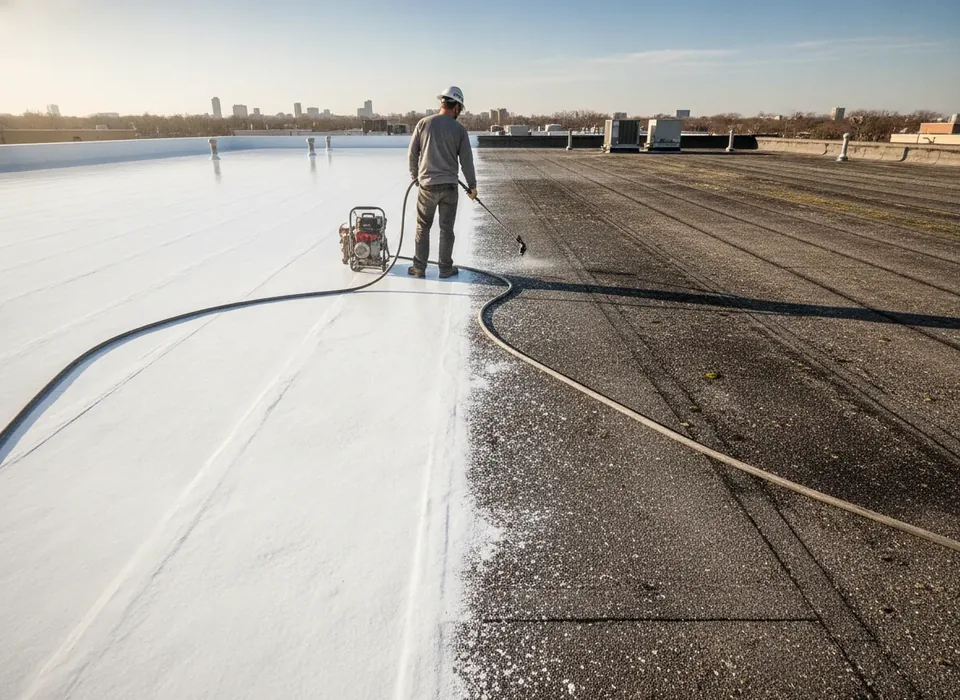
A silicone roof coating is a liquid-applied layer, usually sprayed or rolled, that cures into a seamless rubbery film over an existing low-slope roof. Sold well, it is a cost-effective way to add years to a roof that is still sound. Sold badly, it is an expensive layer of paint over wet insulation. This guide covers where silicone fits, where it does not, and how it compares with acrylic.
Elite Champaign Commercial Roofers is a free quote service. We connect commercial property owners with independent, Illinois-licensed roofing contractors, and you can ask the same contractors for a coating proposal and a replacement proposal and compare them side by side.
What does a silicone roof coating cost?
Typical national installed ranges (Angi/HomeAdvisor 2025) put silicone roof coating at $1.50–$4.50 per sq ft. For comparison, typical national installed ranges (Fixr Jan 2026, ServiceTitan Feb 2026) for new membranes run:
| Option | Typical installed range | Source |
|---|---|---|
| Silicone roof coating | $1.50–$4.50 / sq ft | Angi/HomeAdvisor 2025 |
| TPO single-ply | $4–$14 / sq ft | Fixr 2026; ServiceTitan 2026 ($4–$8) |
| EPDM rubber | $3–$13 / sq ft | ServiceTitan 2026; Fixr 2026 |
| Tear-off / removal (adder) | $1–$5 / sq ft | Fixr 2026 |
Champaign bids vary, so get local quotes. Coating prices move with how much prep and repair the roof needs first: cleaning, seam and flashing repairs, replacing wet sections and primer can make up a large share of the job. Ask every bidder to separate prep and repair from the coating itself. The commercial roofing cost guide has a calculator for rough planning.
Silicone roof coating pros
- Handles ponding water better than many coatings. Silicone is commonly chosen for roofs where some water sits after rain, which is common on older flat roofs in Champaign-Urbana.
- UV resistance. Silicone holds up well to sun exposure, and white or light colors reflect heat.
- Seamless surface. Once cured there are no field seams, which are where many single-ply and built-up roofs start leaking.
- Less disruption. No tear-off, no dumpsters of debris, and usually less noise and odor for tenants than a replacement.
- Lower up-front cost than tear-off and replacement in most scenarios, using the national ranges above.
Silicone roof coating cons
- It cannot fix a wet roof. A coating seals the top. If insulation below is saturated, the water stays trapped. Wet areas have to be found and replaced first.
- Recoating is limited. In general, only silicone sticks well to silicone. Once coated, future maintenance coats and many repairs need to stay in the silicone family.
- Slippery when wet, which matters for maintenance crews and rooftop equipment service.
- Dirt pickup. Silicone tends to hold dirt, which can reduce reflectivity over time.
- Not a structural fix. It does not add slope, fix a sagging deck or solve chronic drain problems.
- Thickness matters. Performance depends on applying enough coating. Too thin and it wears through early.
Silicone vs acrylic roof coating
Acrylic is the other common commercial coating. The trade-offs, in general terms:
| Silicone | Acrylic | |
|---|---|---|
| Ponding water | Generally tolerates it | Generally not suited to ponding areas |
| Base chemistry | Silicone (often solvent-based or high-solids) | Water-based |
| Application weather | Check manufacturer limits | Needs dry weather and warm enough temperatures to cure; rain soon after application is a problem |
| Dirt pickup | Tends to hold dirt | Usually stays cleaner |
| Future recoat | Mostly silicone only | More flexible options |
| Typical use | Flat roofs with some ponding, single-ply, mod bit, spray foam | Well-drained roofs and metal roofs |
In Champaign, the weather window matters for any coating. The average last spring frost is around April 15 and the first fall frost around October 17, per the Illinois State Climatologist. Contractors schedule coatings to fit each product's temperature and cure requirements, so late fall and early spring jobs are often tighter.
When a silicone coating fits
- The roof is watertight or close to it, with leaks limited to seams, flashings and small areas.
- A moisture survey and core cuts show the insulation is mostly dry.
- The membrane is aged but still attached and serviceable: weathered EPDM, TPO, modified bitumen, or a metal roof with surface rust.
- You want to extend the roof's life and defer a replacement budget.
- Some ponding exists but the deck is sound.
When it does not
- Large areas of wet insulation, or a deck that is rotting or rusted through.
- Membrane that is loose, blistered across large areas, or shrinking away from edges.
- Chronic ponding from a sagging deck or failed drains that need structural or drainage work.
- Insulation or drainage that you want to upgrade anyway. That points to replacement; see the energy code and insulation guide.
- A roof with major hail damage that the insurer is still evaluating. Coating over it can complicate the record.
Ask for the moisture survey first
The biggest coating mistake is skipping the diagnosis. A credible proposal should be based on an inspection, a moisture survey (infrared, capacitance or similar) and core cuts. If a bidder quotes a coating from the parking lot, get another bid.
Warranties and what to put in the contract
Coating warranties vary widely. Some are manufacturer warranties tied to a specified thickness and approved applicator; others cover only workmanship. Ask:
- What dry thickness (mils) will be applied, and how will it be checked?
- Which product and manufacturer, and is the warranty from the manufacturer, the contractor, or both?
- What does the warranty require from you, such as annual inspections or cleaning?
- What prep and repairs are included, and how are unexpected wet areas priced?
- Does the job need a permit with the local building department?
Coating vs replacement: how to decide
Think of a coating as maintenance that buys time, and a replacement as a capital project that resets the clock. If the roof is sound and dry, a coating can be good value. If it is wet, structurally tired or overdue for drainage and insulation upgrades, the coating money is usually better spent toward replacement. Get one proposal for each and compare cost per year of expected service. The roof coatings and restoration page covers the process, and the TPO roofing page covers the most common replacement option.
To collect both kinds of proposals, use the free quote form. Independent commercial roofing contractors reply with quotes.
Questions people ask
How much does a silicone roof coating cost?
Typical national installed ranges put silicone roof coating at about $1.50 to $4.50 per square foot (Angi/HomeAdvisor 2025). Prep, repairs and wet-area replacement can move the total a lot. Champaign bids vary, so get local quotes.
Is silicone or acrylic roof coating better?
Neither is better everywhere. Silicone generally handles ponding water and UV well but holds dirt and limits future recoats to silicone. Acrylic is water-based, often suits well-drained and metal roofs, and needs dry, warm enough weather to cure.
Can you put silicone coating over a leaking roof?
Only after the leaks and any wet insulation are found and repaired. A coating seals the surface but traps any water already inside the roof. A moisture survey and core cuts should come before a coating proposal.
Is a roof coating worth it compared with replacement?
It can be when the roof is dry, attached and mostly sound, because it extends life for less up-front cost. When the roof is wet, structurally worn or needs drainage and insulation upgrades, replacement is usually the better long-term value.