
How a Commercial Roofing Project Works
The seven stages of a typical commercial roof repair or replacement in Champaign-Urbana, from the first request to the warranty paperwork, so you know what a good bid and a good job should include.
Get Free Quotes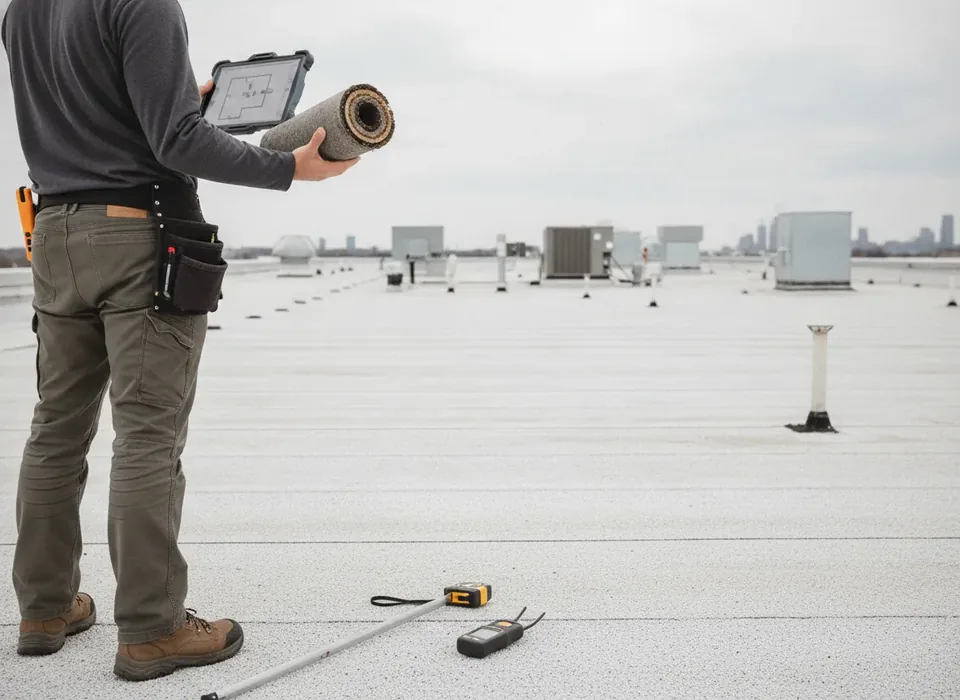
Who does what
Elite Champaign Commercial Roofers is a free quote service, not a roofing contractor. It passes your request to independent commercial roofing contractors and steps out. The inspection, proposal, permit and work all happen between you and the contractor you hire.
The steps below describe what independent contractors typically do on a commercial project. Use them as a checklist when you compare bids. Small repairs move through them quickly; a full replacement on an occupied building can take weeks from first visit to closeout.
The seven steps
1. Request quotes
You describe the building through the form or by phone: type of building, approximate roof size, the current system and age if known, and what is happening. Independent commercial roofing contractors serving your area receive the request and contact you to set up a roof visit. Elite Champaign Commercial Roofers is not involved in the work from here on.
2. Site visit and inspection
The contractor walks the roof and the interior below it. Expect photos of drains, seams, flashings, penetrations, edge metal and parapets. On replacement or recover projects, many take core cuts to count existing layers and check insulation, and some run an infrared or electronic moisture survey to map wet areas. Ask for the findings in writing.
3. Written proposals
Each bid should spell out the scope: layers removed or recovered, deck repair pricing, insulation type and thickness, tapered insulation, membrane type and thickness, flashing and edge metal details, and cleanup. Check the warranty type: a manufacturer no-dollar-limit (NDL) system warranty differs from a material-only warranty or the contractor's own workmanship warranty. Confirm the Illinois license number on the bid.
4. Contract and permit
Once you choose, the contract sets price, schedule, payment terms and change-order pricing for unknowns such as wet insulation. Re-roofing generally needs a building permit. In Champaign, permits go through the Fire Department's Building Safety Division; Urbana, Savoy and county jurisdictions have their own offices. The contractor normally pulls the permit.
5. Installation
Good contractors plan around occupants: tenant notices, protected entrances, crane days scheduled off-hours, dust and odor control near air intakes, and daily dry-in so the building is watertight overnight. Fall protection, guardrails or warning lines, and fire watch for torch work are part of a safe job. Weather can shift the schedule.
6. Closeout and warranty documents
At the end, expect a final walk, any building department inspection, and paperwork: the manufacturer warranty (often after the manufacturer's own inspection), the workmanship warranty, an as-built roof plan, product data and a lien waiver. File these with the building records; you will need them for claims and resale.
7. Maintenance plan
A new roof still needs care. Most manufacturers expect periodic inspections and prompt repairs to keep a warranty valid. A typical plan is spring and fall visits plus a check after major wind or hail, with drains cleared and small issues fixed before freeze-thaw season.
Comparing proposals: a quick checklist
- Is the Illinois roofing license number (starting with 104-) on the bid, and is it an unlimited license? Verify at idfpr.illinois.gov.
- Does each bid assume the same scope: recover or tear-off, the same number of layers removed?
- What insulation is included, and does it address energy-code requirements for a tear-off? A full tear-off with above-deck insulation often triggers an upgrade; the contractor and building department confirm.
- How is wet insulation or deck replacement priced if found: per board, per sheet, per square foot?
- What warranty is offered, by whom, for how long, and what does it exclude?
- Who pulls the permit, and is the permit fee included?
- Does the contractor carry general liability and workers' compensation insurance? Ask for certificates naming you as certificate holder.
- How will tenants, entrances and rooftop equipment be protected during work?
Typical price ranges for each system are on the cost guide. Common questions are answered in the FAQ.
Start with step one
Describe the building once and independent commercial roofing contractors serving Champaign-Urbana and East Central Illinois can reply to schedule a roof visit. No fee, no obligation.
Planning a full replacement? Read about tear-off versus recover first. Dealing with a leak? See commercial roof repair.
Get free quotes
Need a commercial roof looked at? Get free quotes.
Describe the building once and independent, Illinois-licensed commercial roofing contractors can reply with no-obligation quotes.